The Last Coaching Platform You’ll Ever Need
There is a moment in every growing coaching practice when the software stops feeling like help. A prospect reads your website, books through another app, pays through a third, signs in a fourth, joins a group somewhere else, and receives a program link you have to explain in an email. By the time the coaching begins, both of you have already done unnecessary work.
Coachful was built for the practice that has outgrown that arrangement. Your website, offers, bookings, payments, agreements, programs, check-ins, client conversations, community, and business insight belong to one connected system. The client who finds you is the same person you coach. Their story does not disappear every time they cross into a new tool.
The promise: one beautiful place to find clients, sell your work, deliver it, see the progress, and grow what works.
We believe this is the final evolution of coaching software: a platform built around the whole relationship, not a larger box of disconnected features. Here is what that looks like in practice, where older coaching tools start to feel limited, and why Coachful can become the last platform you need to assemble a business around.
The old coaching stack has a hidden cost
Subscriptions are the obvious expense. The real cost is the gap between them. A booking tool knows the appointment but not the program. A course tool knows what was watched but not what was discussed on the call. A community tool knows the conversation but not whether someone completed the habit they promised to keep. A spreadsheet knows only what you remembered to enter.
Each app can be good at its job and the practice can still feel clunky. You become the integration. You copy links, chase forms, check payment status, send reminders, and reconstruct context before every session. Clients feel the seams too. They have to remember where to go to book, where to go to learn, and where to go when they need you.
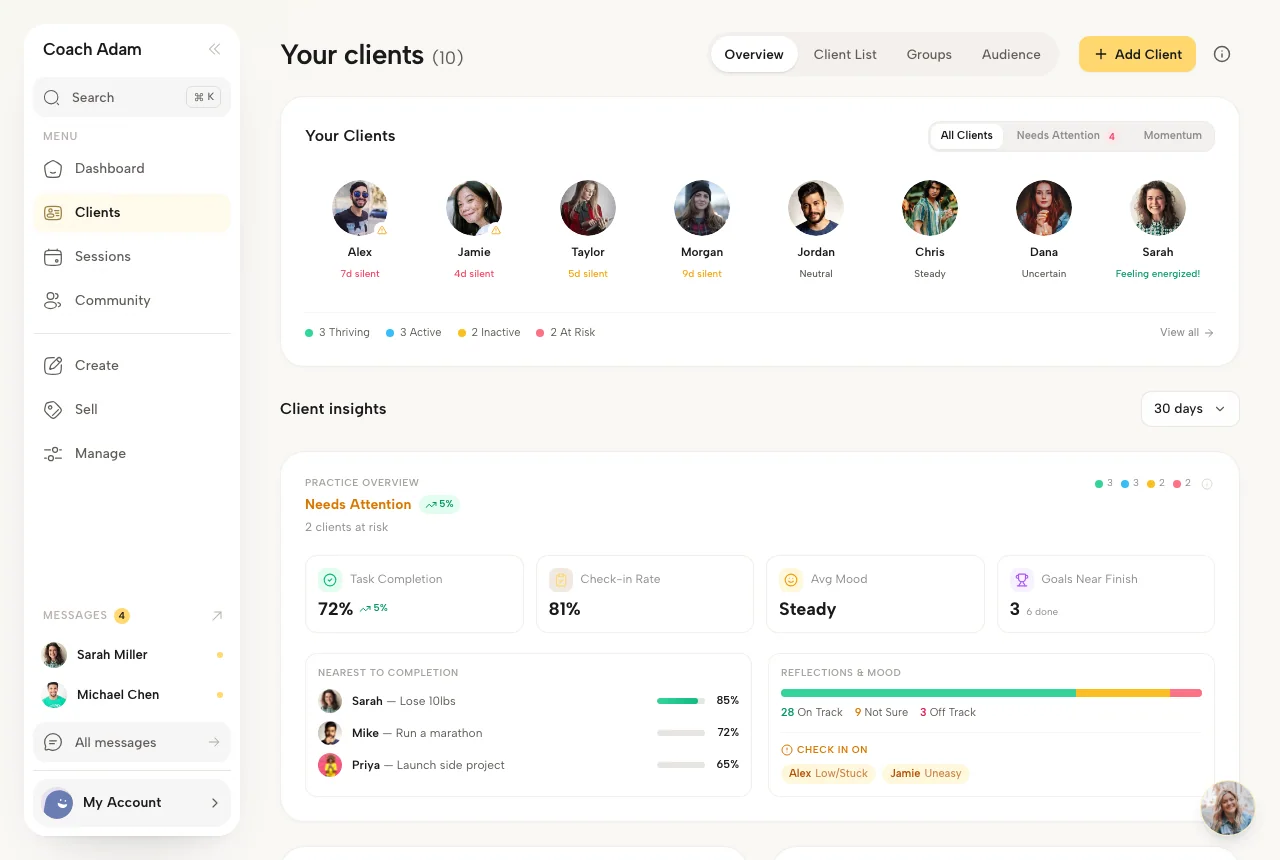
Coachful changes the shape of that work. The operating unit is the client relationship. Sessions, goals, tasks, check-ins, program progress, resources, messages, and billing can be seen in context instead of spread across tabs. The payoff is not a tidier dashboard. It is a coach who can notice the right person at the right time and a client who can stay focused on the work.
One journey, from the first click to the next breakthrough
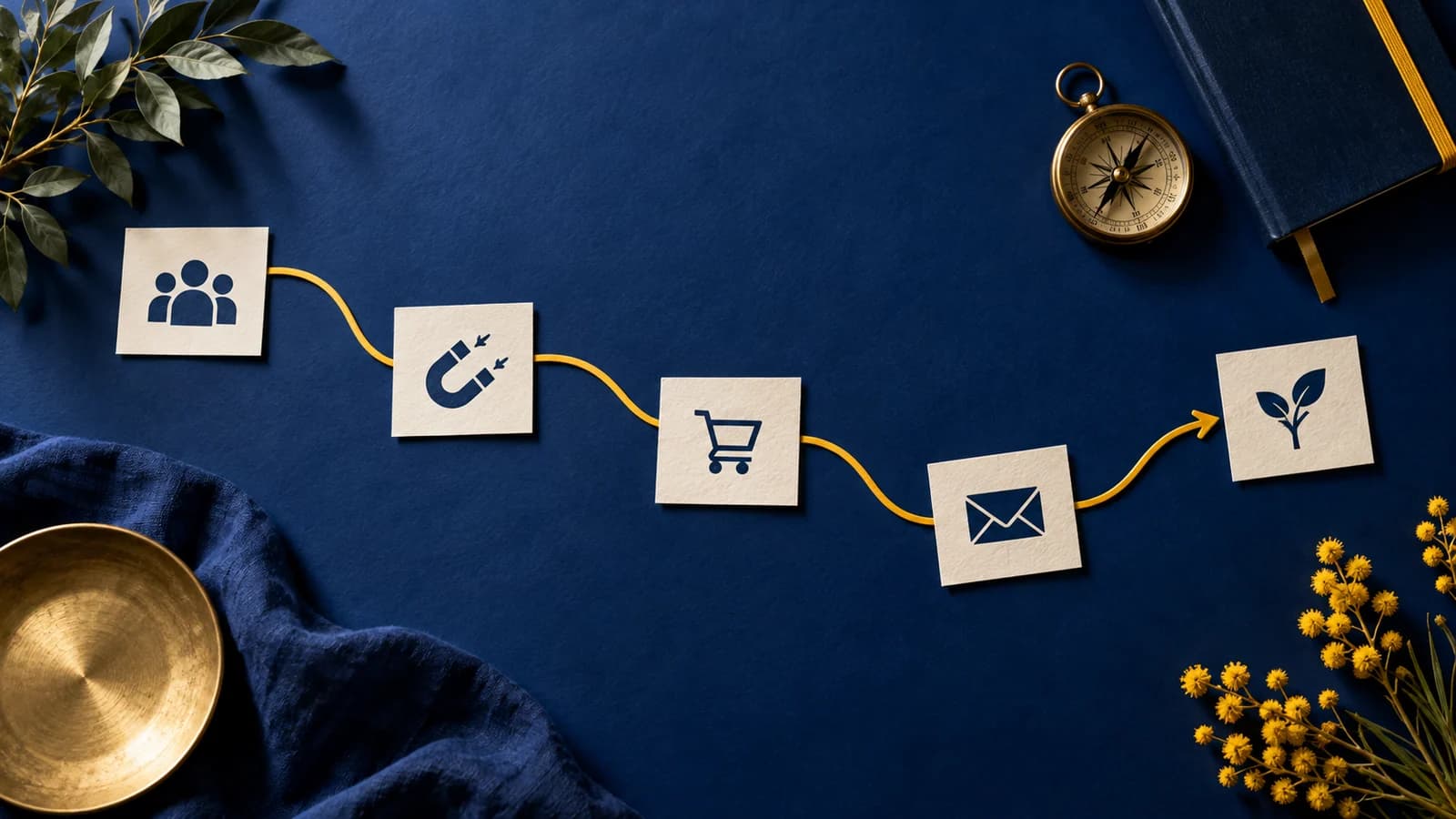
Picture a prospect named Maya. She discovers your site, reads how you work, and chooses an offer. She books a call, completes intake, signs an agreement, and pays. You enroll her in a program. Her lessons and tasks arrive in sequence. She checks in on a difficult Wednesday, gets a message from you, joins her cohort, and returns to the next session with her progress already visible.
That journey is what a coaching platform should hold. Coachful gives each stage a home:
| The moment | What Coachful connects | Why it matters |
|---|---|---|
| Discover you | Website, blog, pages, funnels, and offers | The promise and the path to action share your brand. |
| Become a client | Booking, intake, agreements, checkout, and invoices | The handoff into coaching has fewer loose ends. |
| Do the work | Programs, courses, resources, tasks, goals, habits, and check-ins | The work between calls has a place to live. |
| Stay connected | Client chat, video, group spaces, and community | Support stays close to the work it supports. |
| See what changed | Client progress, activity, and business analytics | You can act on momentum or drift before the next call. |
That is the difference between buying more features and building a more coherent practice.
Your front door should lead into your practice
For many coaches, a website is an island. It can look polished, but the instant someone clicks “work with me,” they leave the brand for a booking page, a checkout, and then an unrelated portal. Coachful's website builder sits in the same system as the work you sell and deliver. You can create pages and a blog, build funnels, publish offers, and point a call to action toward a real booking or enrollment path.
The visual editor and AI assistance help you get the first version live without hiring a team just to move a button. Your custom domain and branding carry through the experience. You can still refine the words and design as your practice evolves, but you start with infrastructure connected to your actual business rather than a brochure you must wire up later.
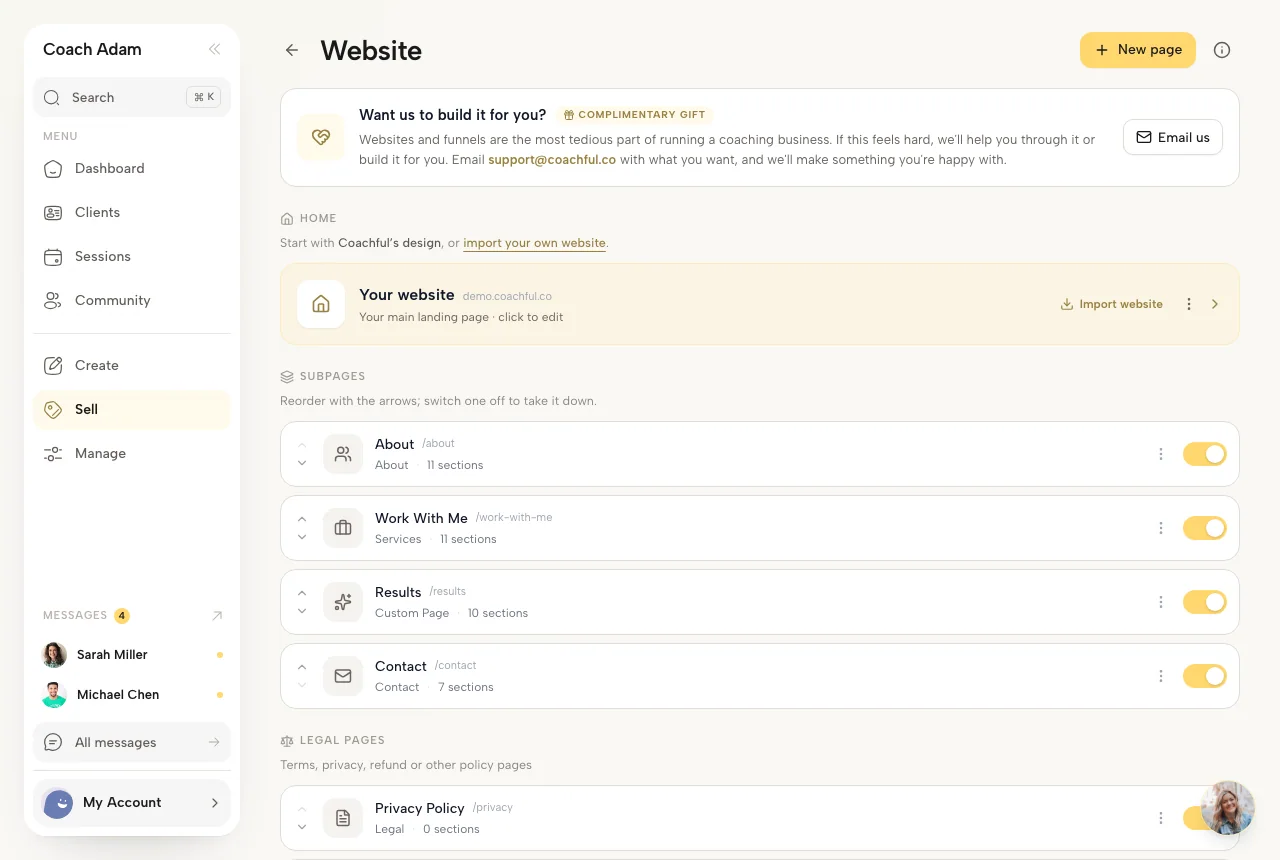
That connection matters when you launch a new group program or digital resource. The sales page is close to the offer, the offer is close to checkout, and checkout is close to delivery. Fewer handoffs mean fewer places for a motivated prospect to lose the thread.
From booking to payment, the details finally belong together
Scheduling sounds simple until your practice includes discovery calls, paid one-to-one sessions, group calls, recurring sessions, session credits, time zones, and a real calendar you cannot double book. Coachful brings those into one sessions workspace. You can manage availability and bookings while keeping the appointment connected to the client and the offer behind it.
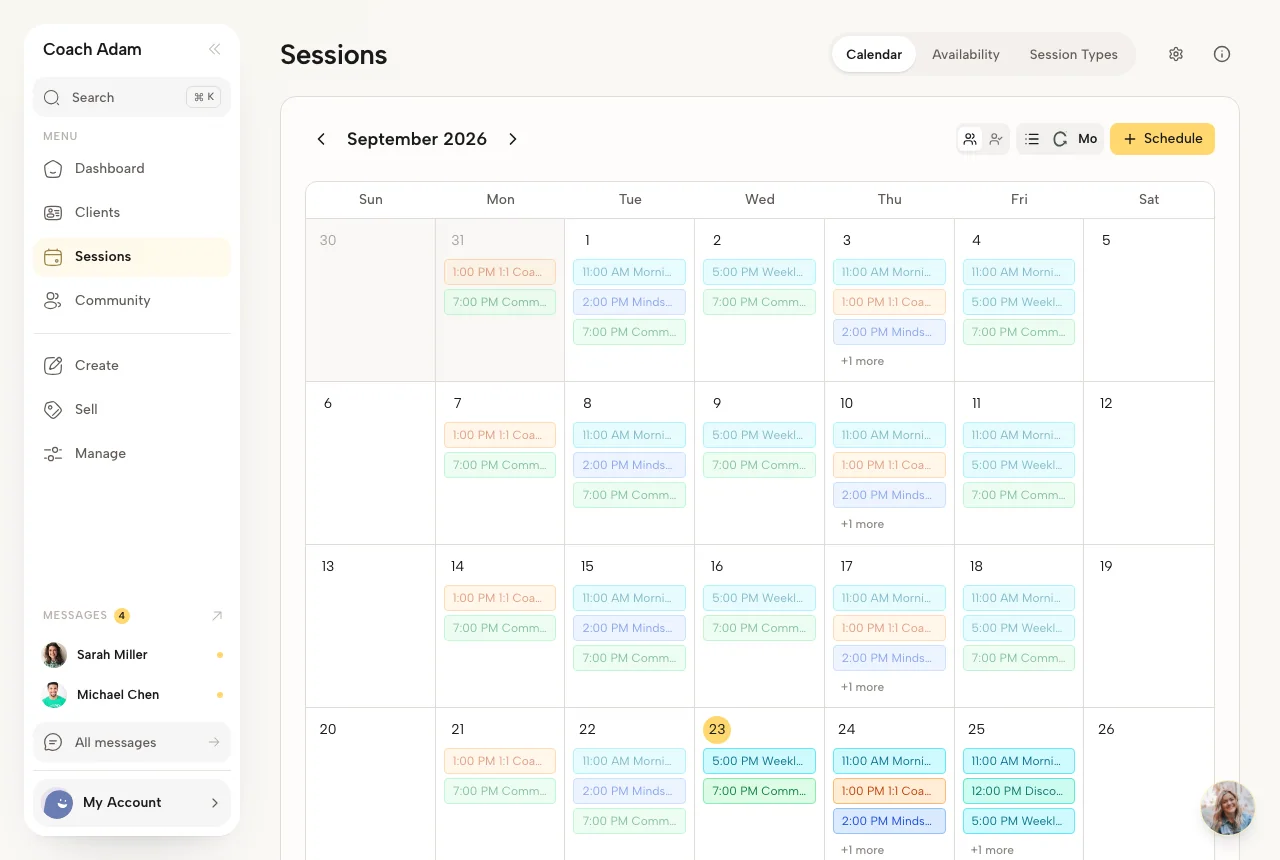
Money belongs in that same picture. Coachful supports offers, Stripe-connected payments, subscriptions, invoices, and the records you need to understand what a client bought. Agreements and intake are part of the relationship rather than loose PDFs in an inbox. You can move from “she booked” to “she is ready to begin” without reconstructing the sale across five services.
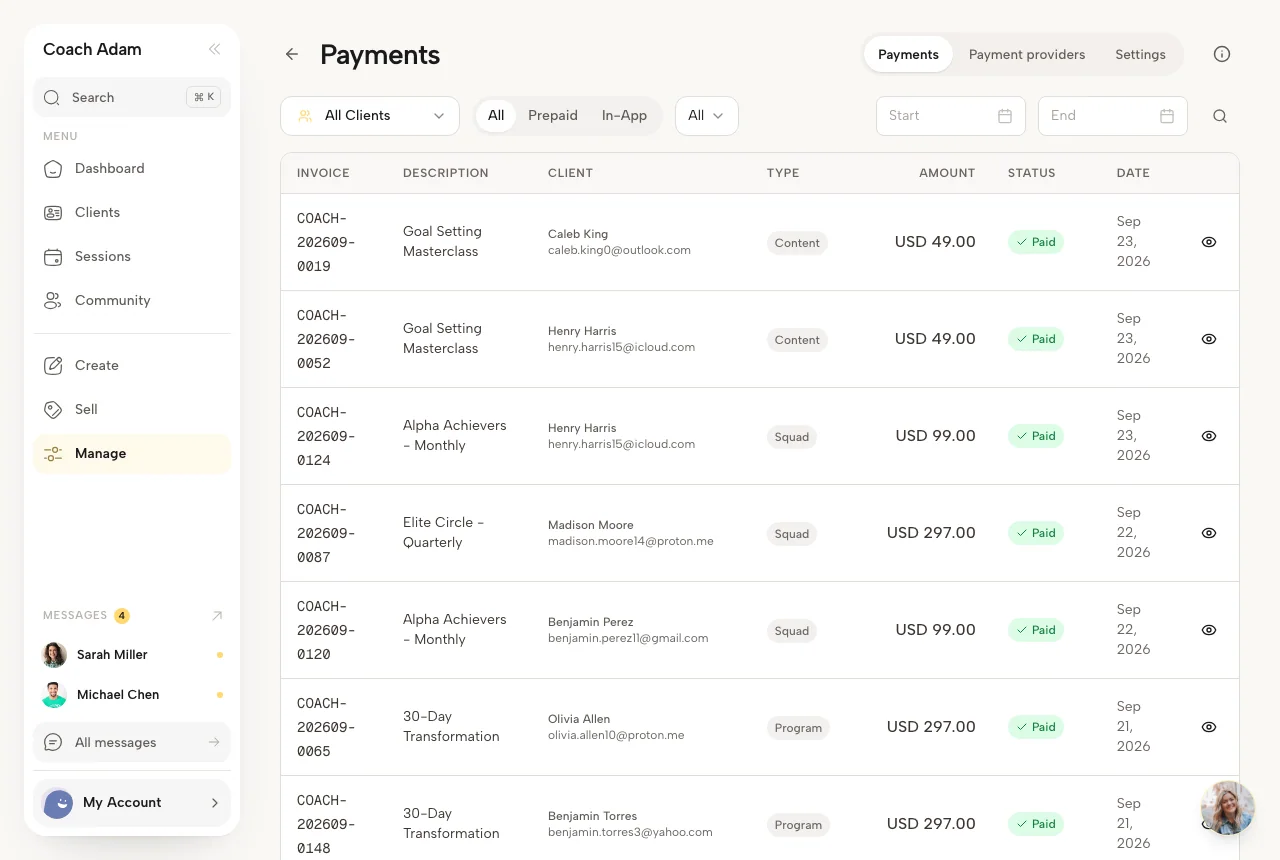
One platform does not mean pretending outside infrastructure does not exist. Payment processing still requires a connected provider, and many coaches will continue syncing an external calendar or using a preferred video service. The difference is that those services connect to a practice whose client, offer, and delivery context already live together.
The breakthrough is what happens between sessions
A great call creates clarity. The next six days determine whether that clarity turns into change. This is where coaching software has historically been weakest. A folder of recordings and PDFs is not an experience that helps someone show up on Tuesday morning when motivation fades.
In Coachful, you can design a program with a sequence of lessons, sessions, tasks, goals, habits, and resources. You can create onboarding and recurring coaching flows for check-ins and reflections. Clients get a home for the next action. You get visibility into what they actually did, where they are stuck, and when to reach out. A one-to-one engagement can be deeply personal while a group program can use the same strong foundation at a larger scale.
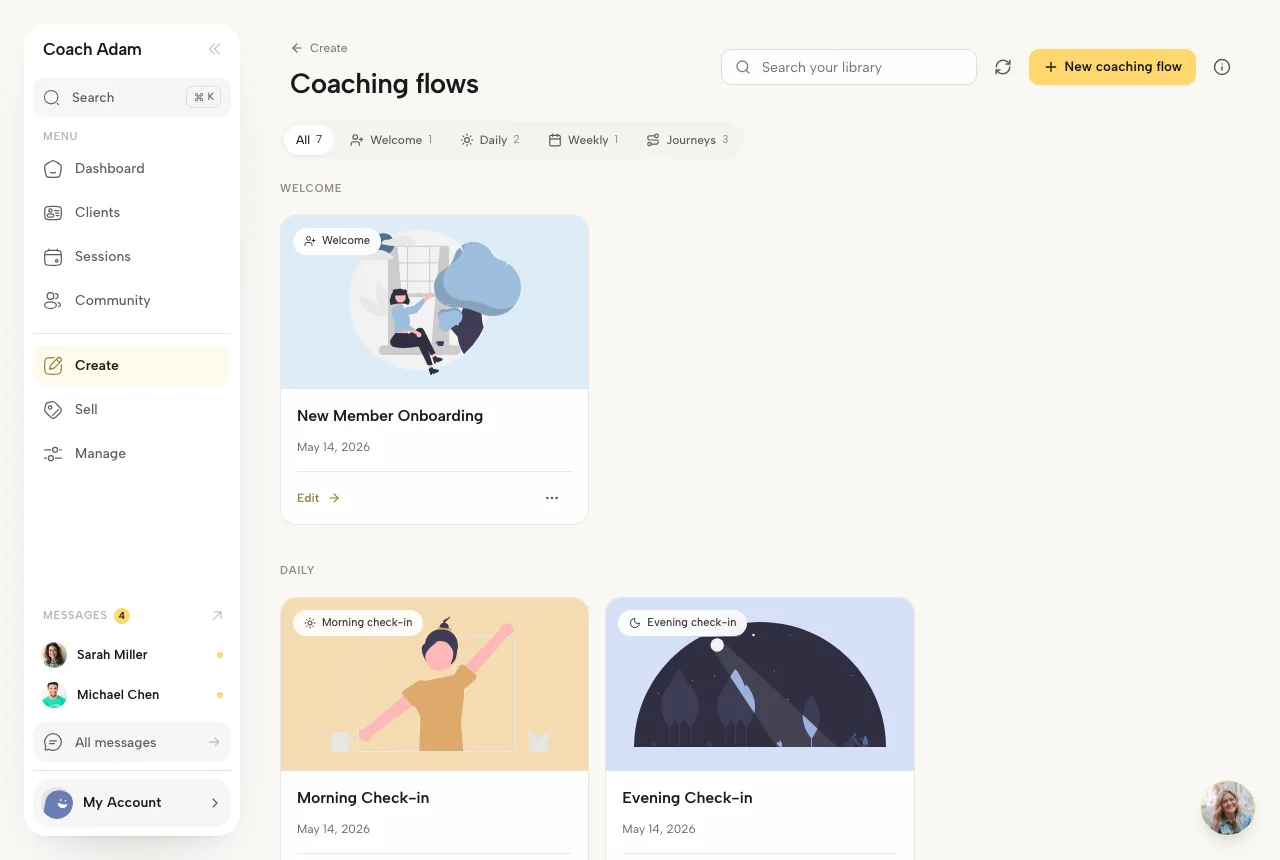
This is the point of the platform. The coaching method you have spent years developing should be supported by the software, not compressed into a booking package. You should be able to deliver a structured transformation, not just sell access to your calendar.
Community is part of the program, not another invitation link
Group coaching often breaks at the handoff. Members pay in one place, watch material in another, join a chat somewhere else, and miss the call link in an old email. Coachful gives programs and cohorts their own connected spaces. Coaches can pair group content and live sessions with discussion, shared accountability, and ongoing client communication.
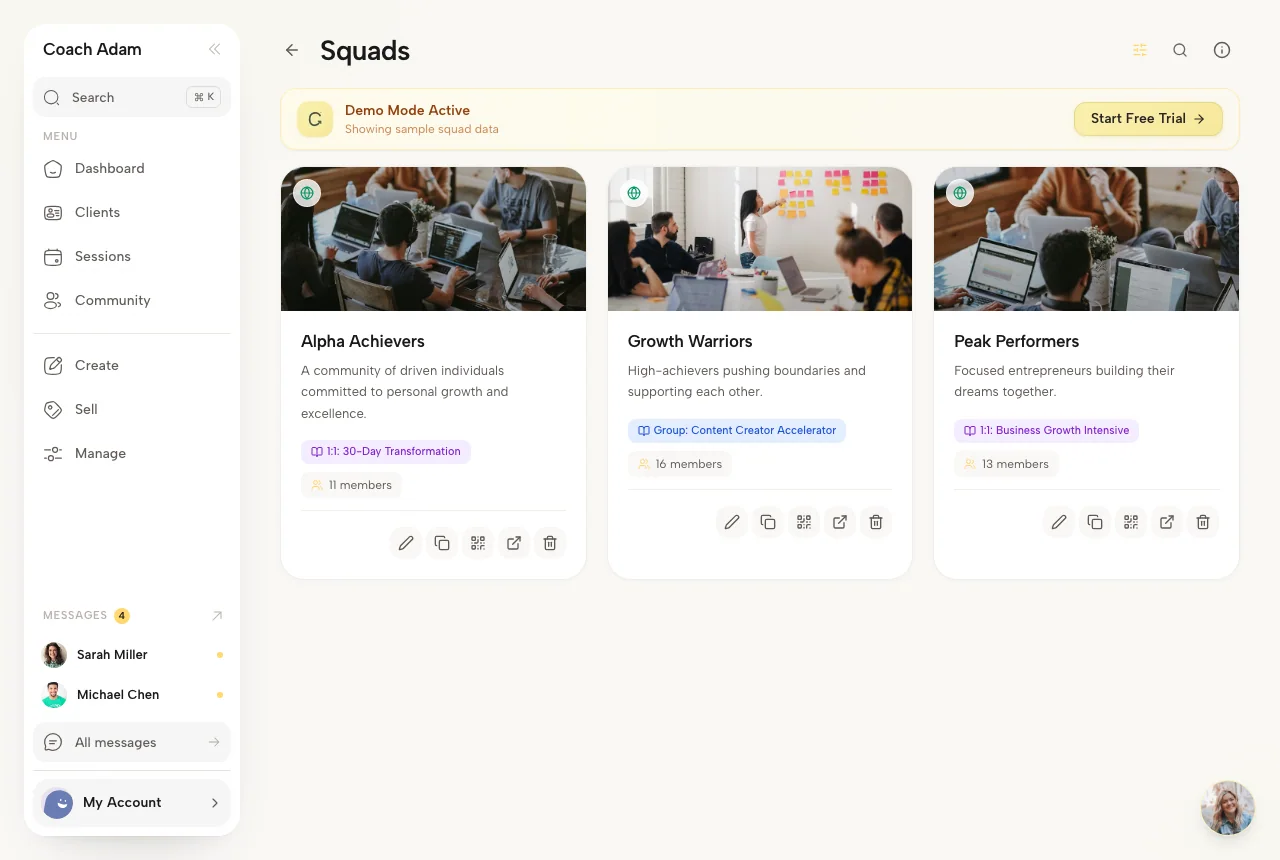
That makes the community useful. A group space works best when it supports a shared journey, not when it becomes an isolated feed demanding content for its own sake. A client can move between the program, the people in it, and the coach guiding it without rebuilding the context each time.
A client home that goes with them
Most client progress happens away from a desk. The habit gets checked on a commute. The worksheet is opened after dinner. The message to a coach is sent when the difficult moment is happening, not when a laptop is convenient. Coachful brings the client's goals, daily focus, programs, upcoming sessions, and conversations into a mobile experience, with iOS and Android app support.
This is an underrated part of an all-in-one platform. Giving clients one place they want to return to is more valuable than sending them a perfect collection of links. The easier it is to take the next small action, the more room there is for momentum to compound between sessions.
See the practice you are actually running
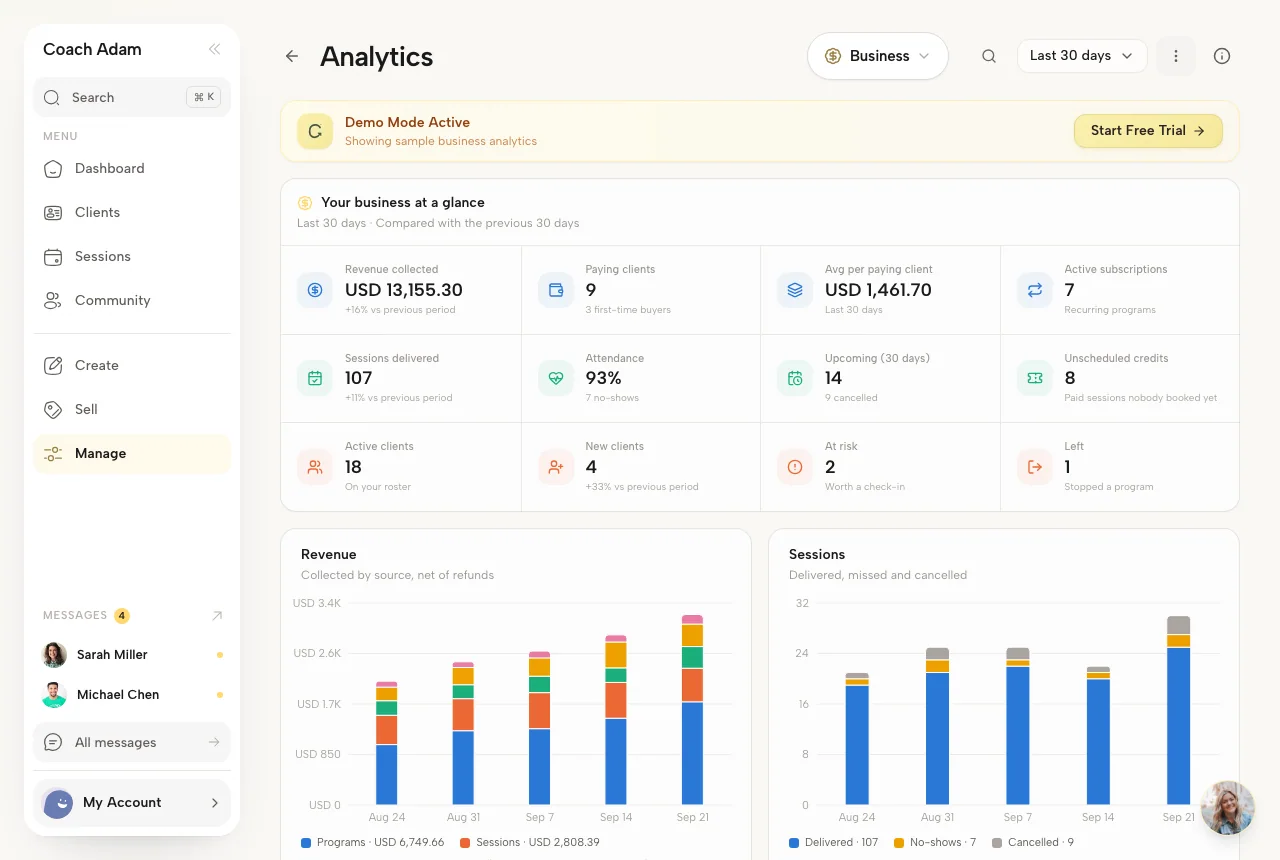
Most dashboards tell you what happened to your business. Coachful also helps you see what is happening inside the coaching. Which clients are engaged? Who has gone quiet? Are check-ins being completed? Are sessions being attended? Which offers bring in revenue, and where is the practice growing?
That view changes your Monday morning. Instead of opening every profile and hoping to remember the most important follow-up, you can start with the people who need attention. Instead of guessing whether a program is working, you can examine the behavior around it. The numbers serve the relationship.
AI that knows the work you are doing
Most AI tools begin with a blank prompt. Coachful's Michelle assistant works inside the platform you use to run the practice. You can ask for help building a program or resource, draft and refine content, and get help navigating the work of running your coaching business. Coachful also offers AI-supported client insights and, on eligible plans, deeper Intelligence tools for growth and research.
The advantage is context. A generic text box can produce a worksheet. An assistant inside your coaching system can help turn the idea into something that belongs in your workflow. You still decide what is true, what is useful, and what your clients should receive. The technology moves the busywork; the coach remains responsible for the coaching.
Paperbell, Delenta, and CoachAccountable: strong tools from an earlier definition of “all in one”
Those companies helped make coaching software a category. They also show how far the category's promise has moved. They are worth considering for particular practices, but the “one tool for everything” claim means something more demanding today.
Paperbell: excellent at the transaction, narrower after it
Paperbell describes a clean package-to-booking flow: clients choose an offer, sign a contract, pay, and schedule. For a coach whose service is primarily a set of calls, that is useful. Paperbell also says it offers a coaching website, client portal, forms, group coaching, and content delivery. We would not pretend those features do not exist.
Its own guide draws the boundary: it is not a full course platform, it has no native mobile app, and each coach needs a separate account. Once your practice needs structured programs, daily accountability, a client app, and several coaches working within the same environment, a package-first tool can feel like the previous chapter. Coachful is built for the relationship after the sale as much as the sale itself.
Delenta: a management platform, but integration is still central to its pitch
Delenta offers client portals, courses, group coaching, team management, and goals. It is a serious product, especially for coaching organizations. Its site also emphasizes bringing in Zoom, Stripe, Google, and other tools, while its public website product is framed around a coaching landing page.
Coachful's ambition is broader: the branded website and blog, funnels, selling, coaching delivery, community, and growth tools form one continuous practice. If you want your public presence and your client experience to feel like one place, that is a more compelling starting point than managing a growing collection of integrations.
CoachAccountable: deep accountability, a separate front door
CoachAccountable has substantial tools for actions, metrics, worksheets, courses, groups, and reporting. Coaches who prize detailed measurement have reason to respect it. Its own website integration guide, however, describes placing a login link or widget on a separate coaching website. The company says the platform itself runs on coachaccountable.com.
That is a recognizable older architecture: a capable coaching back office attached to your public site. Coachful puts the public presence and the client relationship inside the same product vision. You can still track accountability, but you can also build the place where a future client first meets you and the place where they keep showing up.
The category has moved. The question is no longer whether one app can take a booking and a payment. It is whether your entire practice can feel like one intentional experience.
What “the last platform” really means
It means you can stop choosing software around each new offer. Start with one-to-one coaching. Add a group program. Publish a course or a resource library. Open a community. Bring on another coach. Build a new funnel. The core relationship between your brand, your clients, and your work remains in place.
It means a client has fewer logins and fewer “where was that link?” moments. It means your method can live beyond the call. It means the coach can see a person, not a collection of records. And it means growth does not automatically create a new stack of subscriptions and handoffs.
No software does the human work of coaching for you. Coachful does something better: it gives that work a complete home. We think that makes it the most exciting coaching platform available today, and the one you can build your next chapter on.
Build your practice on Coachful
Want to see the full system first? Explore the complete Coachful platform tour or review the plans. Competitor descriptions above were checked against their own public product pages on 24 September 2026; features can change.